A successful walk-in closet starts with clean dimensions rather than decorative hardware. When hanging rods, drawer banks, and open shelves match the physical measurements of your clothes, getting dressed is simple and fast. Dividing your storage by garment length, keeping walkways wide, and adding shadow-free lighting turns any dressing area into a calm, functional room that stays organized.
Instead of installing uniform rows of identical shelving, modern closet design relies on modular zones tailored to daily dressing routines. Setting up dedicated spaces for everyday separates, long dresses, shoes, and delicate accessories protects your wardrobe and keeps every piece visible.
Zone hanging sections by garment length and daily habits
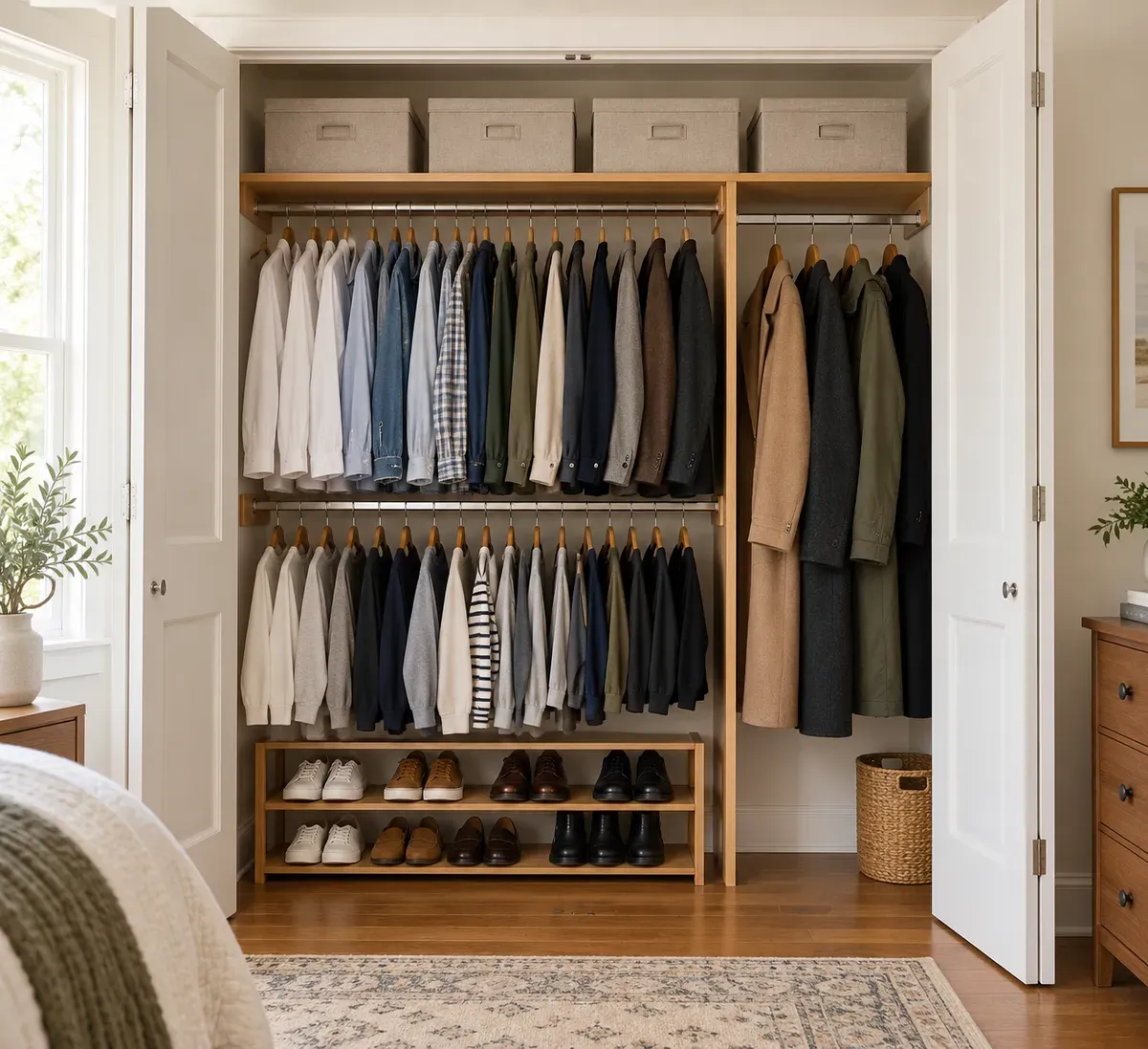
Most closets waste vertical space by hanging everything from a single high rail. Shirts, folded trousers, and suit jackets take up less than half the height of an eight-foot wall. Using two rods, one above the other, doubles your hanging capacity immediately.
Double up vertical space for everyday separates
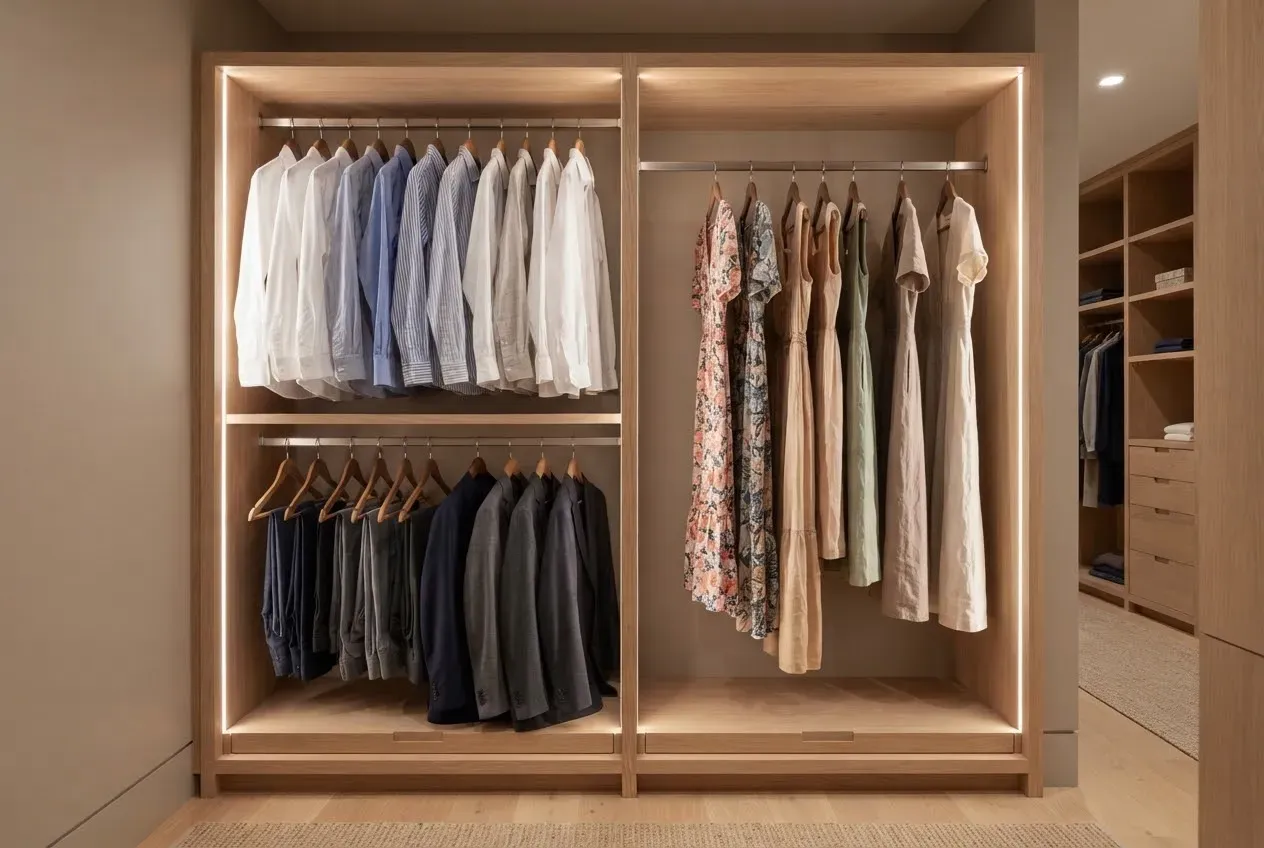
Install double-hung rods for short garments like button-down shirts, blazers, blouses, and folded pants. A practical layout puts the top rod at 80 to 84 inches from the floor and the lower rod at 40 to 42 inches. This spacing gives you 38 to 40 inches of vertical drop per section, so shirt hems and trouser cuffs hang freely without dragging on the lower rail or the floor.
Build hanging sections with an interior depth of at least 24 inches. Standard adult hangers measure 17 to 19 inches across. A 24-inch cabinet depth prevents sleeves and jacket shoulders from rubbing against the back wall or catching on passing doors.
Dedicate continuous drops for full-length garments
Set aside a single-rod section for long clothing like maxi dresses, jumpsuits, and overcoats. Mount this rod between 66 and 72 inches high to provide a 60 to 66 inch vertical drop.
Group medium-length pieces like midi dresses, trench coats, and skirts in a separate zone with 50 to 52 inches of clearance. Raising the bottom of this section off the floor leaves space underneath for a low drawer bank, a laundry hamper, or shoe racks.
Balance aisle clearance before adding an island or vanity
A central island offers flat surface space for packing luggage and organizing accessories, but it demands substantial floor area. Dropping an island into a tight room turns daily dressing into an obstacle course.
Maintain clear walkways around a central island
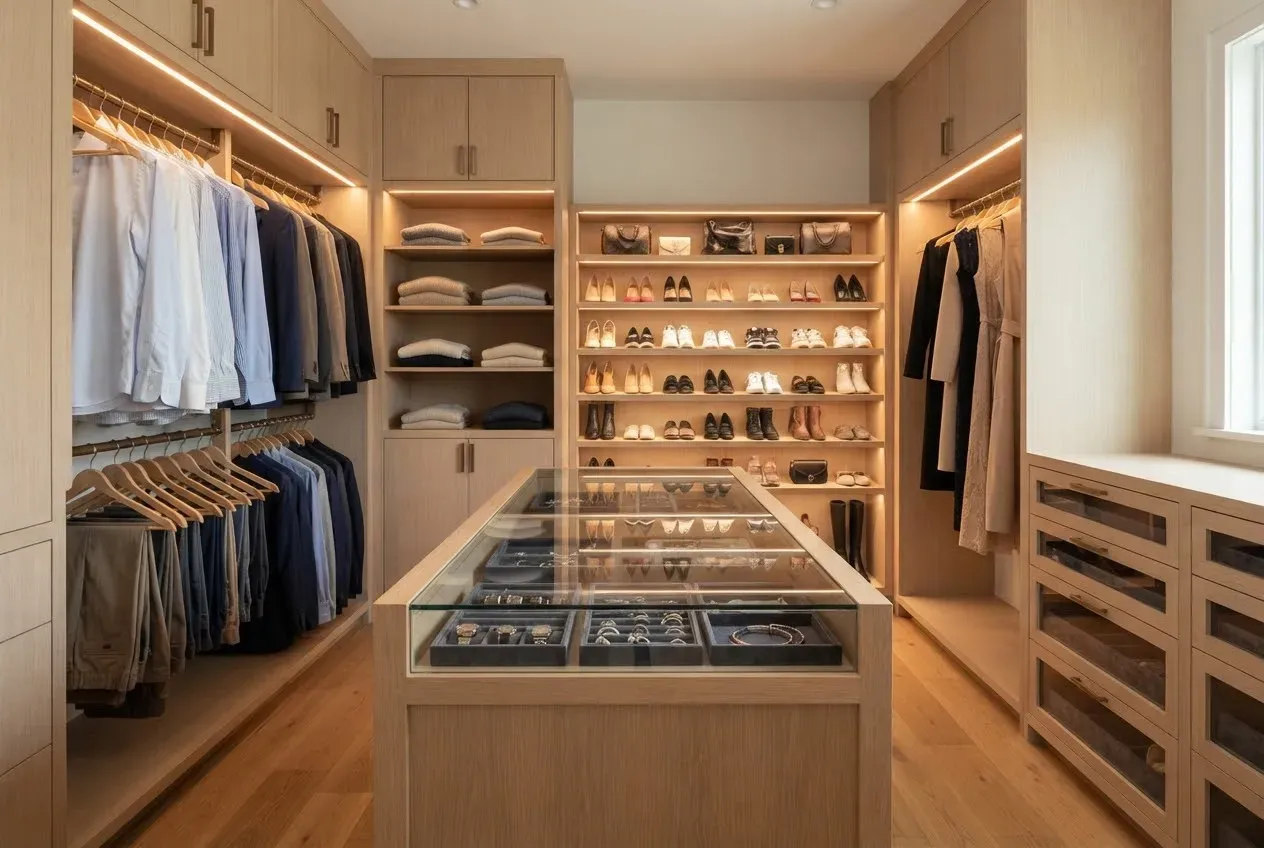
A freestanding island works well only if the room is at least 10 to 12 feet wide. Keep at least 36 inches of clear walkway between the edge of the island and surrounding wardrobe doors or drawer fronts.
This 36-inch aisle lets you pull drawers fully open, step back to see outfit options, and crouch to reach lower shelves without bumping into the island base. If your room is narrower than 10 feet, skip the central island. A perimeter vanity desk or an L-shaped peninsula preserves an open central floor while keeping a flat staging counter.
Design jewelry display drawers with glass tops
Top the island with a pane of tempered glass over a shallow upper drawer. Lining this drawer with modular velvet compartments creates dedicated spots for watches, cufflinks, sunglasses, belts, and jewelry.
A clear glass top lets you pick accessories from above without pulling the drawer out. For lower drawers, install soft-close undermount slides and adjustable wood dividers to organize folded knitwear, scarves, and everyday items.
Layer recessed LED lighting for accurate color rendering
Closets rarely receive enough natural daylight. Without good artificial light, telling the difference between dark navy, charcoal gray, and black is frustrating. A single overhead ceiling fixture casts heavy shadows over hanging clothes and deep lower drawers.
Choose high-CRI LEDs with warm neutral color temperature
Install LED lights with a Color Rendering Index (CRI) of 90 or higher. High-CRI illumination reveals the true shade and weave of fabrics without distortion.
Pick LEDs rated between 3000K and 3500K. A 3000K light gives clean, warm-neutral illumination that flatters skin tones in dressing mirrors. It avoids both the yellow tint of 2700K living room bulbs and the cold blue glare of 5000K commercial strips.
Route diffusers into hanging rods and shelf lips
Mount low-voltage LED channels directly into the cabinetry to light clothes where they sit:
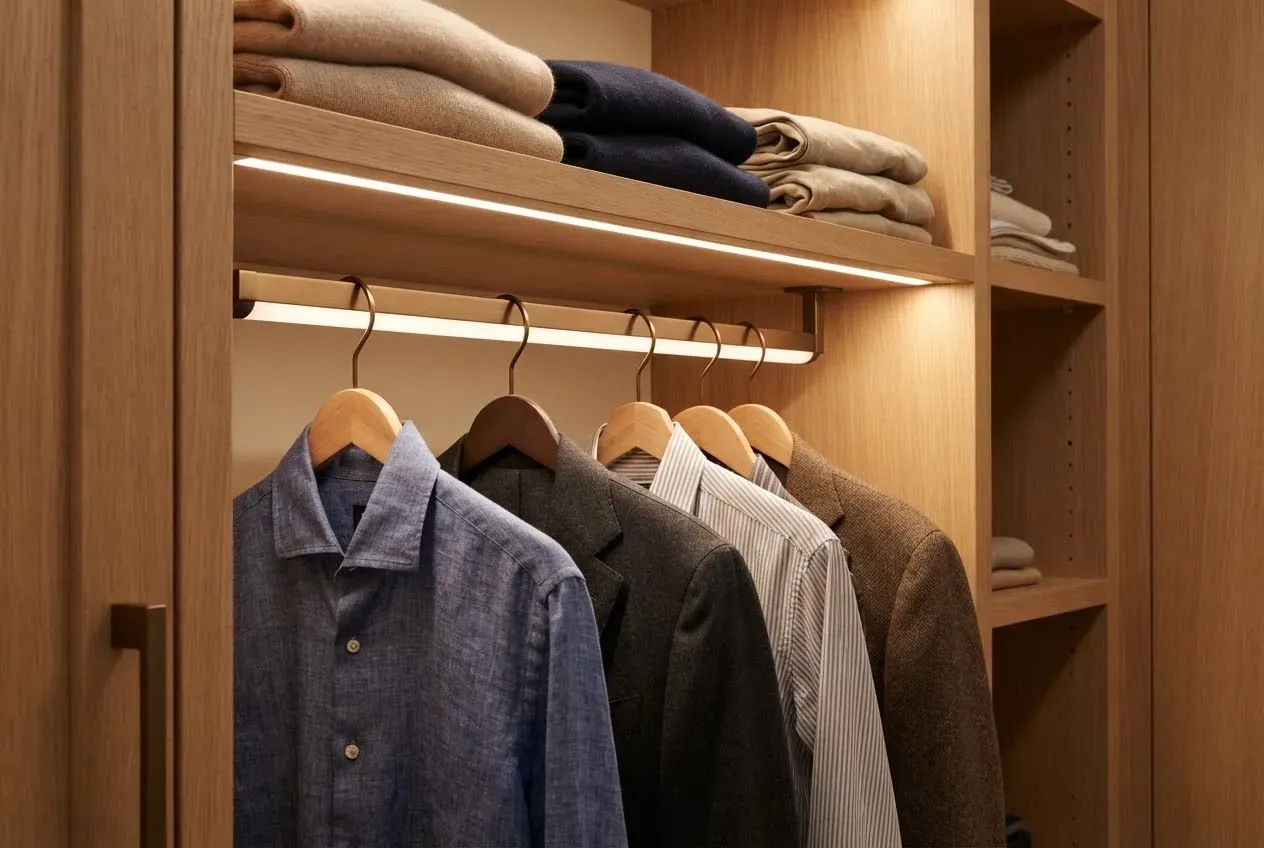
- Illuminated hanging rods: Use metal poles with a bottom channel holding an LED strip and an opal diffuser. Light casts straight down across clothing without casting shadows from above.
- Under-shelf light profiles: Cut a shallow groove into the front underside of each shelf to set an aluminum channel flush with the wood. A milky diffuser eliminates hot spots and washes light across folded stacks.
- Vertical light channels: Recess vertical LED extrusions into the front edges of cabinet side uprights to light full-length clothing evenly from top to bottom.
Low-voltage LED channels stay cool during use, making them safe near fine wool, silk, and linen.
Protect shoes and handbags with specialized shelving
Footwear and structured leather bags lose their shape when piled on closet floors or crammed into bins. Dedicated shelving keeps leather goods upright and easy to reach.
Set adjustable shelf heights for footwear
Mount shoe shelves on adjustable pins spaced in 1.25-inch increments so you can change heights as your collection shifts:
- Flats and sneakers: Allow 7 to 8 inches of vertical height per shelf.
- Heels and ankle boots: Allow 10 to 12 inches of clearance to protect heels and ankle collars.
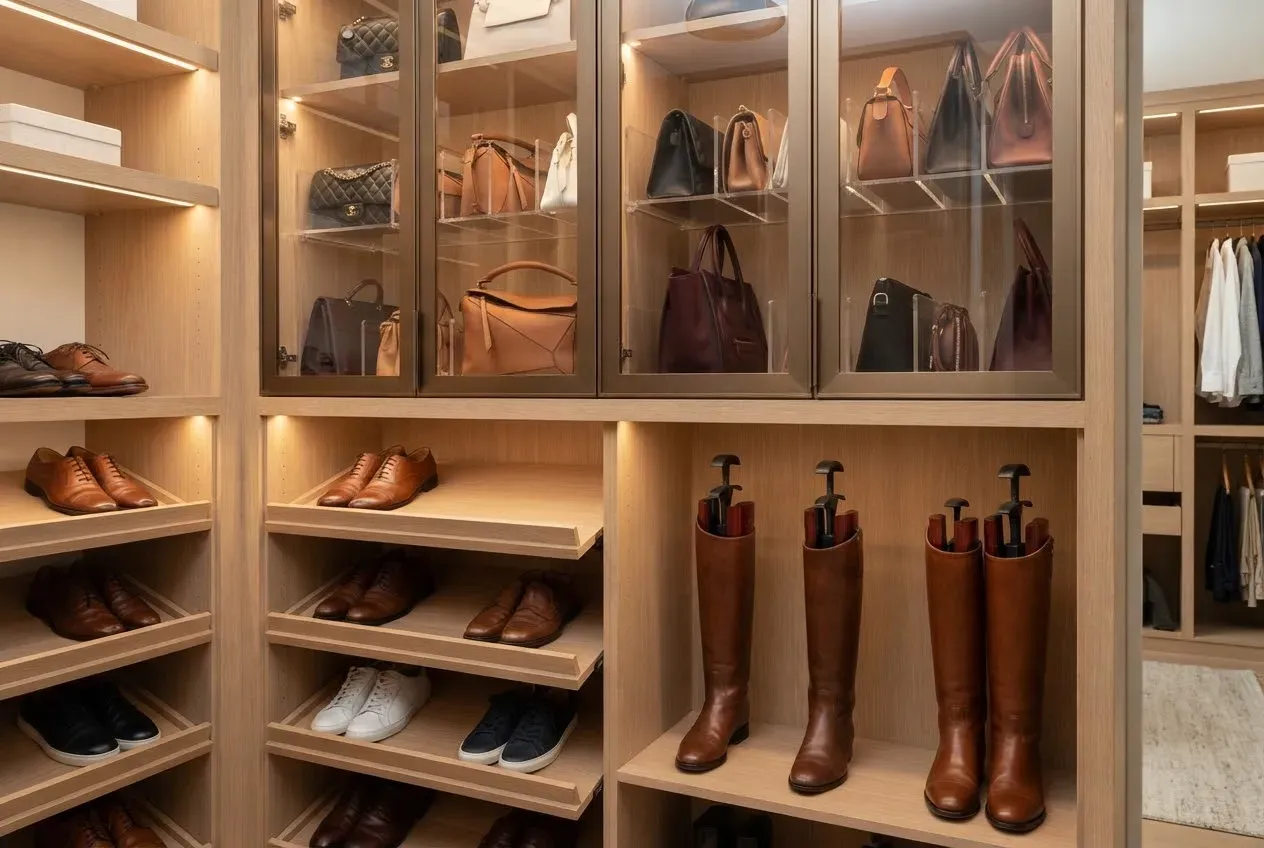
- Tall boots: Provide 16 to 20 inches of vertical drop. Insert structured cedar or felt boot shapers into the shafts to keep tall leather boots from creasing or falling over.
Flat shelves hold the most pairs across a wall. Angled shelves set at 15 to 20 degrees with a front lip turn shoes into a clean display while keeping soles off the woodwork.
Use acrylic dividers and framed glass doors for handbags
Handbags need side support so leather handles do not crease and sidewalls do not sag. Place clear acrylic shelf dividers 8 to 12 inches apart to keep clutches and shoulder bags upright in individual slots.
For delicate suede, light leather, and seasonal bags, fit cabinet bays with framed glass doors. Glass fronts keep bags visible while shutting out dust, saving you from packing favorites away in opaque dust bags.
Maximize high shelves and hidden corners
Upper walls and corner intersections are common dead zones in walk-in closets. Thoughtful fittings make these hard-to-reach spots practical.
Store seasonal luggage and blankets in top-tier cubbies
Take closet cabinetry all the way to the ceiling instead of leaving an open gap that collects dust. Use the top tier, above 84 inches, for deep open cubbies measuring 14 to 16 inches high.
This high tier is the best spot for carry-on luggage, seasonal bedding, and spare pillows packed in fabric bins. Adding a simple card label to each bin lets you spot stored items quickly without climbing a step stool.
Solve deep corners with curved rods or pull-out carousels
Where two hanging rails meet at an inside 90-degree corner, straight rods leave clothing buried in the dark. Install a continuous curved corner hanging rod so hangers glide around the corner smoothly. Alternatively, install two-tier rotating corner carousels to bring hanging items forward with a quick turn.
A great walk-in closet is not about filling every inch with shelves. By establishing the right hanging heights, protecting wide walking aisles, and putting bright, true-color light right above your clothing, you build a space that keeps your wardrobe in order every day.