
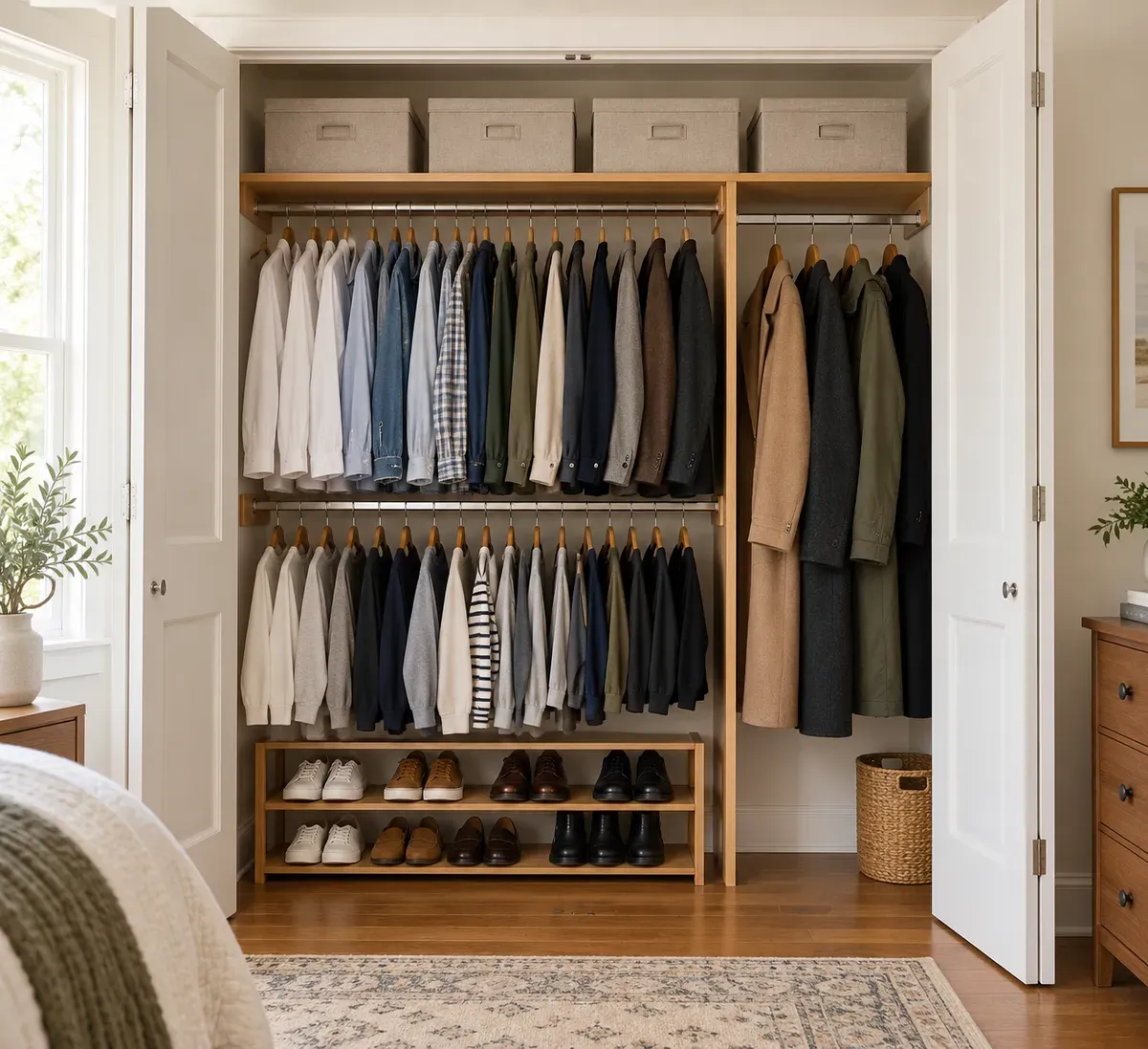
Start by removing clothes you no longer need, then give everyday clothes the easiest-to-reach space. Keep seasonal items in labeled, covered containers, separate folded stacks with dividers, and use the space beneath short garments for shoes. These closet organization ideas work with an existing reach-in closet; you don't need to replace the whole interior.
Choose organizers after sorting and measuring. A second hanging level helps when most of your clothes are short. If you own more sweaters than shirts, shelves or hanging cubbies may be a better use of that same space.
Sort your wardrobe before adding storage
Empty the closet so you can see both what you own and where the space is going. If you can't finish in one session, work through a shelf or clothing category at a time rather than leaving your entire wardrobe on the bed.
- Group similar items together. Put shirts with shirts, shoes in pairs, and accessories together so duplicates are easy to spot.
- Separate what you wear from what needs a decision. Set aside donations and items to sell. Give repairs their own small bag rather than returning them to the rail. Keep occasional formalwear or sentimental pieces deliberately; an arbitrary deadline for wearing something isn't a reason to discard it.
- Divide the clothes you're keeping into short-hanging garments, long-hanging garments, and folded items. Fold wool sweaters rather than hanging them by the shoulders, as recommended in Woolmark's care guidance.
- Clean the empty shelves and floor. If a rod sags or a bracket is loose, leave that section unloaded until it is repaired.
Before putting everything back, note which category takes up the most room. Plan around that wardrobe, not a display closet with a handful of matching outfits.
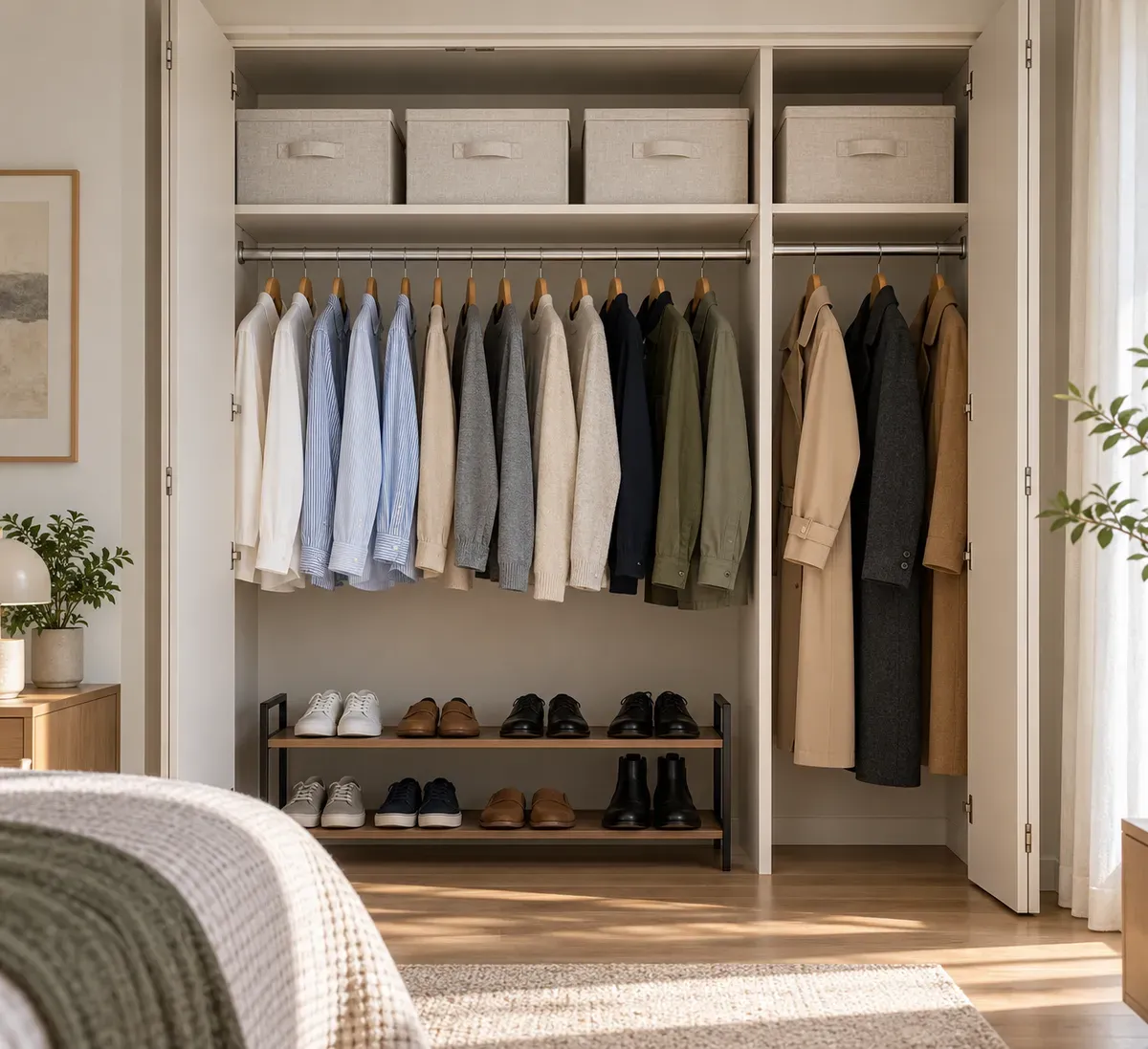
Put daily clothes within reach and seasonal items above
Use frequency of use to decide where things belong. The right height depends on who uses the closet, so test each position by reaching for an actual garment or container.
Keep everyday items in the easiest-to-reach area
Place work clothes, everyday tops, and frequently worn pants where you can see and retrieve them comfortably. Group by clothing type first. Sorting by color within each group is optional; it shouldn't make putting laundry away harder.
In a shared closet, give each person a defined section. A shelf divider or separate bin can make the boundary clear without adding furniture.
Reserve upper shelves for light, occasional items
Use high shelves for lightweight seasonal clothing and accessories you rarely need. Keep heavy boxes lower, where you can handle them without lifting them overhead.
Measure the shelf and the opening in front of it. A container can fit on a shelf but still be too tall to pull past the door header. Allow room to grip it and bring it out without tipping its contents.
Store seasonal clothes clean and completely dry. For wool sweaters, use covered storage without tightly compressing them. Woolmark's sweater-care manual supports storing dry sweaters in sealed plastic containers; plastic itself isn't a reason to reject a storage box.
Give the lower area a specific job
Use the space under short clothes for a low shoe rack, shoe boxes, or a laundry basket. Leave the area beneath long dresses and coats open so hems don't rest on stored items.
Open and close every door with the closet loaded. With sliding doors, place frequently used bins where the door opening lets you pull them straight out.
Choose hanging space or cubbies to suit your clothes
Measure the usable interior width and depth, including space occupied by doors and tracks. Hang your longest garment to see how much clear space it needs below the rod. For a possible second hanging level, hold short garments at both proposed positions and check that they don't overlap or touch the floor.
A double-hang layout suits shirts, shorter skirts, and pants folded over hangers. Keep a separate full-height section for long dresses or coats. Two rods won't help if most of your wardrobe needs the full drop, or if the upper rail is out of reach.
For a smaller change, group similar hangers together. Slim hangers can reduce bulk where the hanger itself takes up space, but thick coats still need room. Use shaped or padded hangers for woven wool jackets and coats rather than replacing every hanger with the thinnest option.
Use hanging cubbies when folded storage is missing
A fabric organizer with reinforced shelves can give lightweight folded clothes or scarves a home in a closet with a rod but no accessible shelving. Choose one narrow enough to leave useful hanging space beside it. Soft compartments that sag when filled are less useful for keeping folded piles separate.
A hanging organizer trades rod space for folded storage and adds weight to the existing rail. Keep heavy shoes and bulky loads on lower shelving instead. If the closet's rod capacity is unknown, use shelf bins rather than adding a loaded hanging unit or suspended second rod.
Multi-tier hangers also trade width for vertical space. Try one with the garments you intend to store: if the lowest item reaches the floor, a shoe rack, or clothes on a lower rail, it doesn't suit that section. Skip it if retrieving one pair of pants means removing several others.
Separate folded stacks and contain loose accessories
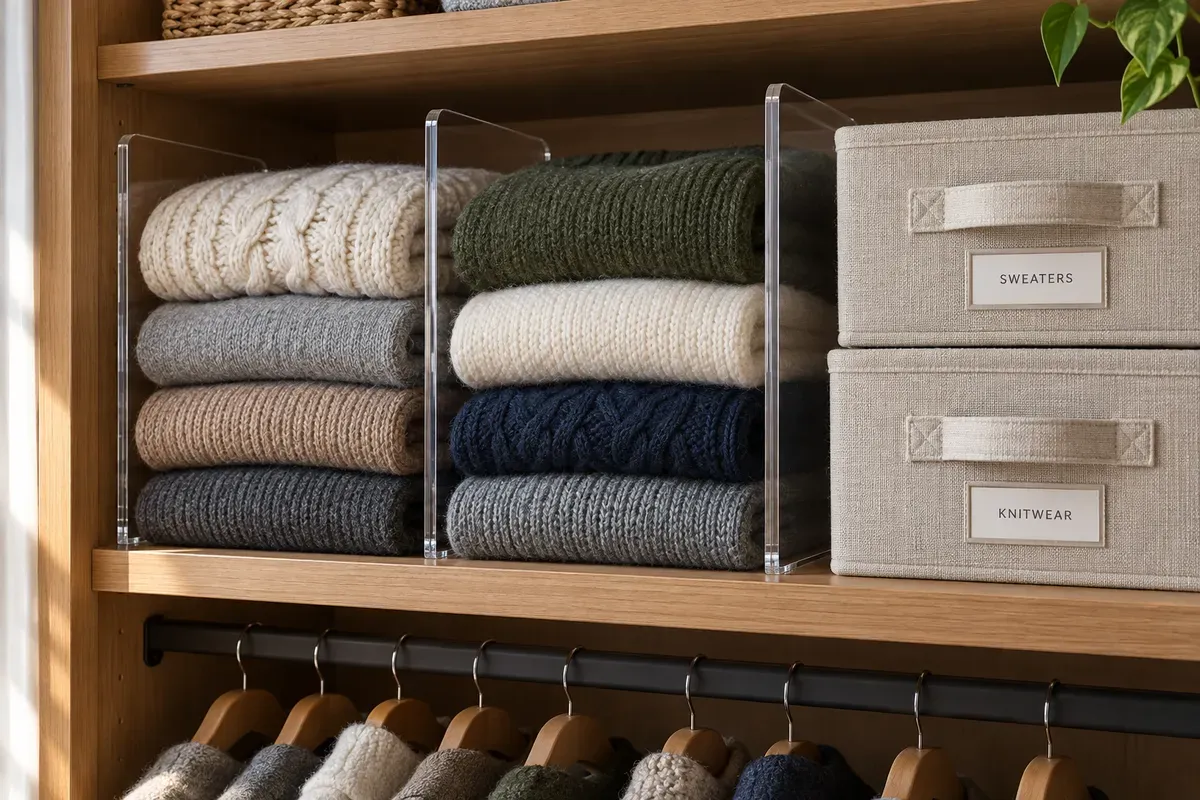
Use dividers for clothes you want to see and lift directly from a shelf. Use bins for small items that spread out or disappear behind larger pieces. They solve different problems, so you don't need to put everything in a container.
Keep folded stacks low enough to use
Place a rigid divider between neighboring stacks of sweaters, jeans, or T-shirts. Make the stacks short enough that you can take a lower item without the pile collapsing. Bulky knits need shorter stacks than thin tees; a fixed garment count won't suit both.
Match the divider's attachment to the shelf material and thickness. A clip designed for a solid shelf isn't interchangeable with a divider made for wire shelving. Don't force a tight clip onto a shelf. Clear dividers keep neighboring stacks visible, while coated-wire dividers can serve the same organizing purpose when they fit the shelving.
If stacks keep falling despite dividers, reduce their height or move the category into a drawer or pull-out bin. More dividers won't fix an overfilled shelf.
Label bins for what you need to find
Give each bin a recognizable category, such as "Winter hats and gloves" or "Swimwear." Put the label on the side facing the closet opening, where you can read it without moving another container.
Clear bins let you see the contents; opaque bins conceal mixed colors and shapes. Either can work with a readable label. Covered containers are useful for seasonal storage, while open bins make daily accessories easier to grab.
Compared with loose piles on a deep shelf, a bin lets you bring a whole category forward at once. It also keeps small pieces together. The tradeoff is access: a lidded box stacked behind another box is inconvenient for something you wear every day.
Fill bins so they slide out easily, and avoid putting loose extras on their lids. If a category overflows, sort it again or give it more space rather than hiding the excess behind the row.
Store shoes vertically without blocking access
Choose shoe storage around the pairs you wear most and the space left below your clothes. Measure a pair of your largest shoes as well as the available space; a box that holds sandals may not hold boots or larger sneakers.
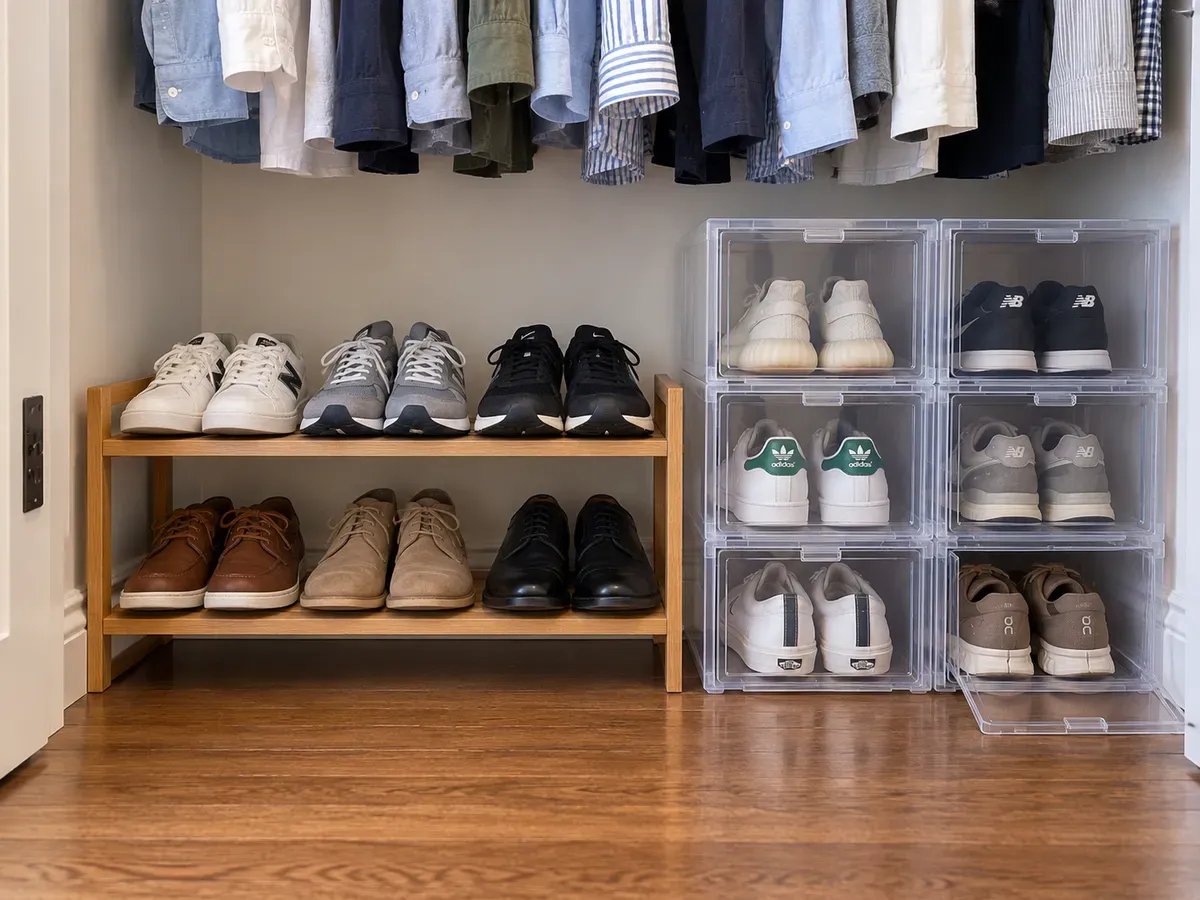
- A low, tiered rack gives everyday pairs open access. Leave enough space above the top row to lift shoes out without pushing hanging clothes aside.
- Stackable front-opening boxes let you retrieve a lower pair without lifting the boxes above it. Use boxes designed to stack together, keep the stack within their stated limit, and leave room for the fronts to open. Closed boxes are for dry footwear, not damp shoes just taken off.
- A door-pocket organizer can hold small shoes or accessories on a hinged door if the loaded pockets and hooks allow it to close. Sliding and bifold doors often leave too little clearance; use a shallow bin or rack inside instead when the organizer would interfere with door movement.
Avoid filling a deep shelf with two rows of everyday shoes if the front row hides the back. A visible, accessible row is more useful than storage you have to dismantle each morning.
For belts, scarves, and small bags, try divided bins or separate door pockets. Use a side-wall hook only where the item won't catch on clothes or obstruct the door. Test the spot with the bag or belt before deciding on hardware.
Make the closet easy to reset
Put clean laundry back into its assigned spaces and return empty hangers to one end of the rail. Keep the laundry basket accessible enough that using it is easier than dropping clothes on the floor.
When hangers stop sliding freely or a bin won't close, revisit that category. Remove things you no longer want, move occasional items out of the daily zone, or change the space allocated to it. You don't have to discard an item every time something new comes in, but the closet still needs enough room to put clothes away without a struggle.
Rotate seasonal items when your clothing needs change. Bring the next season's clothes within reach and update the labels on anything you pack away. If one pile keeps returning, look at what it contains: shirts may need more rail space, while loose scarves may need a bin. Fix that recurring problem before adding another organizer.