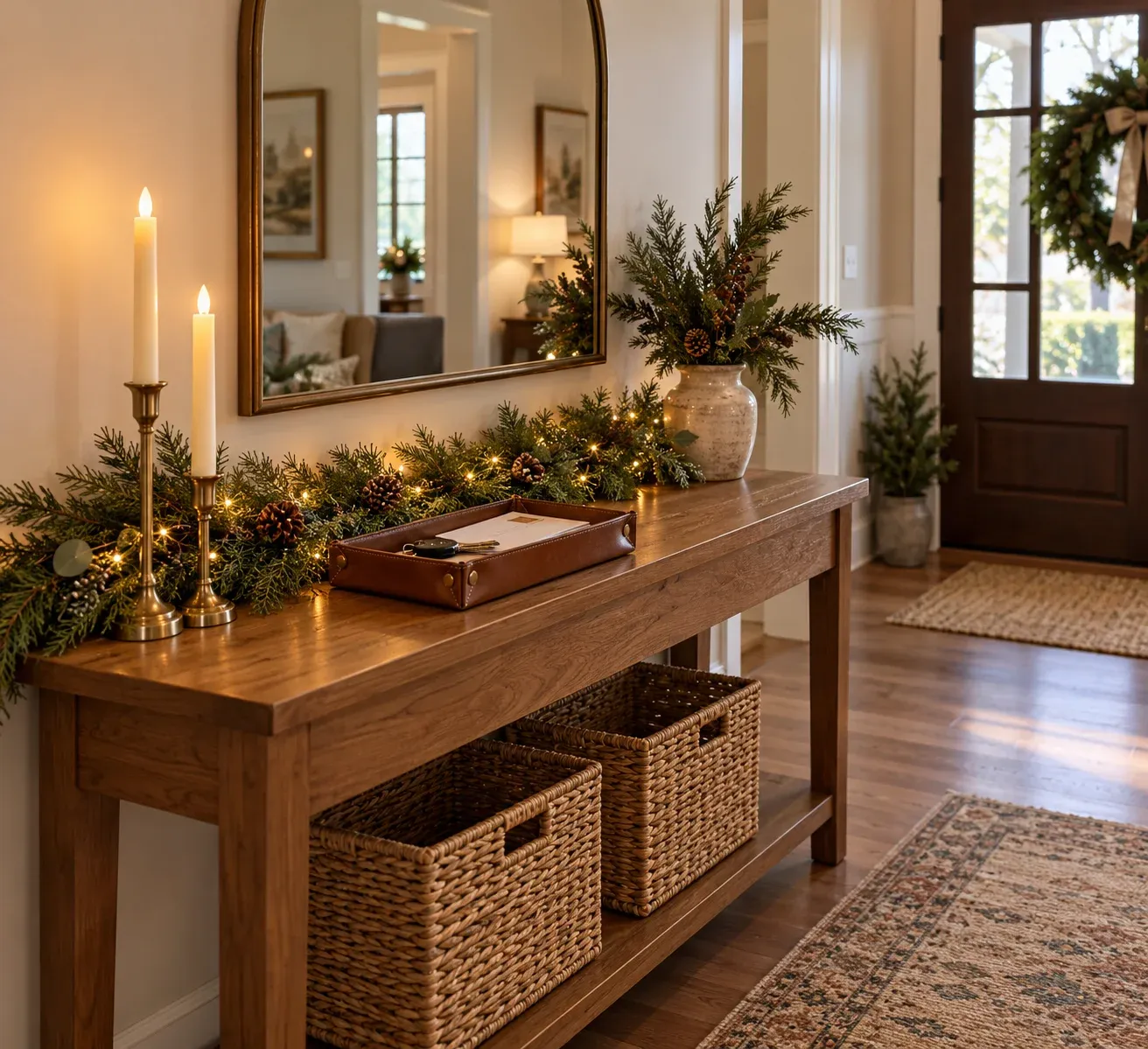
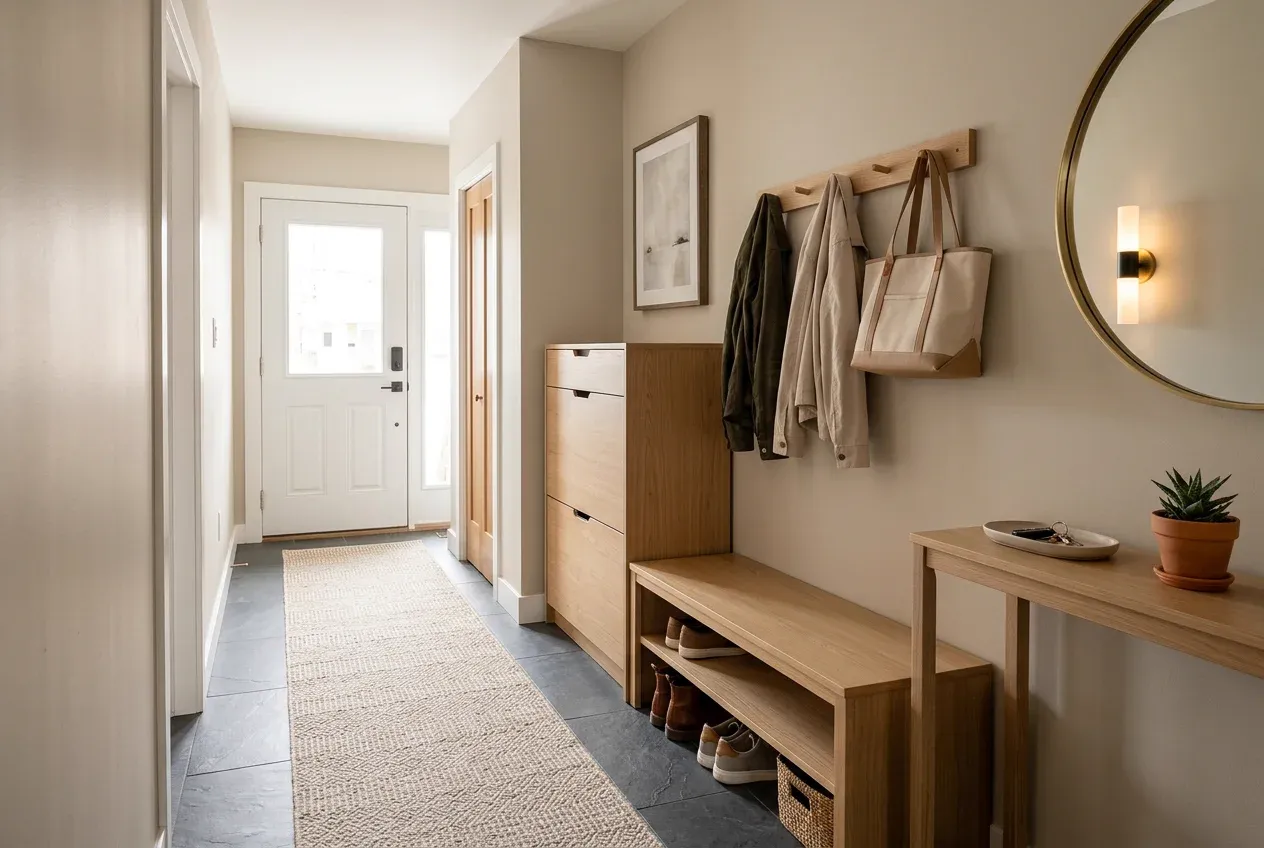
Start with shallow storage along one wall, a reachable place for keys, and a clear route through the front door. Keep everyday coats and shoes close to hand; store the rest elsewhere. These entryway ideas make a narrow foyer easier to use without filling it with furniture.
You may only need a shoe cabinet, a short hook rail, and a small tray. Choose those pieces around what lands by your door each day, then add a mirror and a little color to make the entrance feel welcoming.
Test the layout before choosing furniture
Open the front door fully and notice where you stand to close it, set down groceries, and remove your shoes. Include any nearby closet doors in this test. An empty hallway can look generous until a cabinet drawer and the front door are open together.
Mark the proposed furniture footprint with painter's tape. Walk past it carrying your usual bag. Leave room to bend down, pull out shoes, and sit if you plan to include a bench. Measure from the furniture's outermost point, including handles, rather than just the wall.
In a narrow hallway, start with storage on one side. Hooks on the opposite wall still take up space once coats hang from them. If the taped layout feels cramped, reduce the furniture depth or leave out a piece before rearranging the whole entrance.
Give everyday shoes and coats an easy home
Choose shoe storage by what has to fit
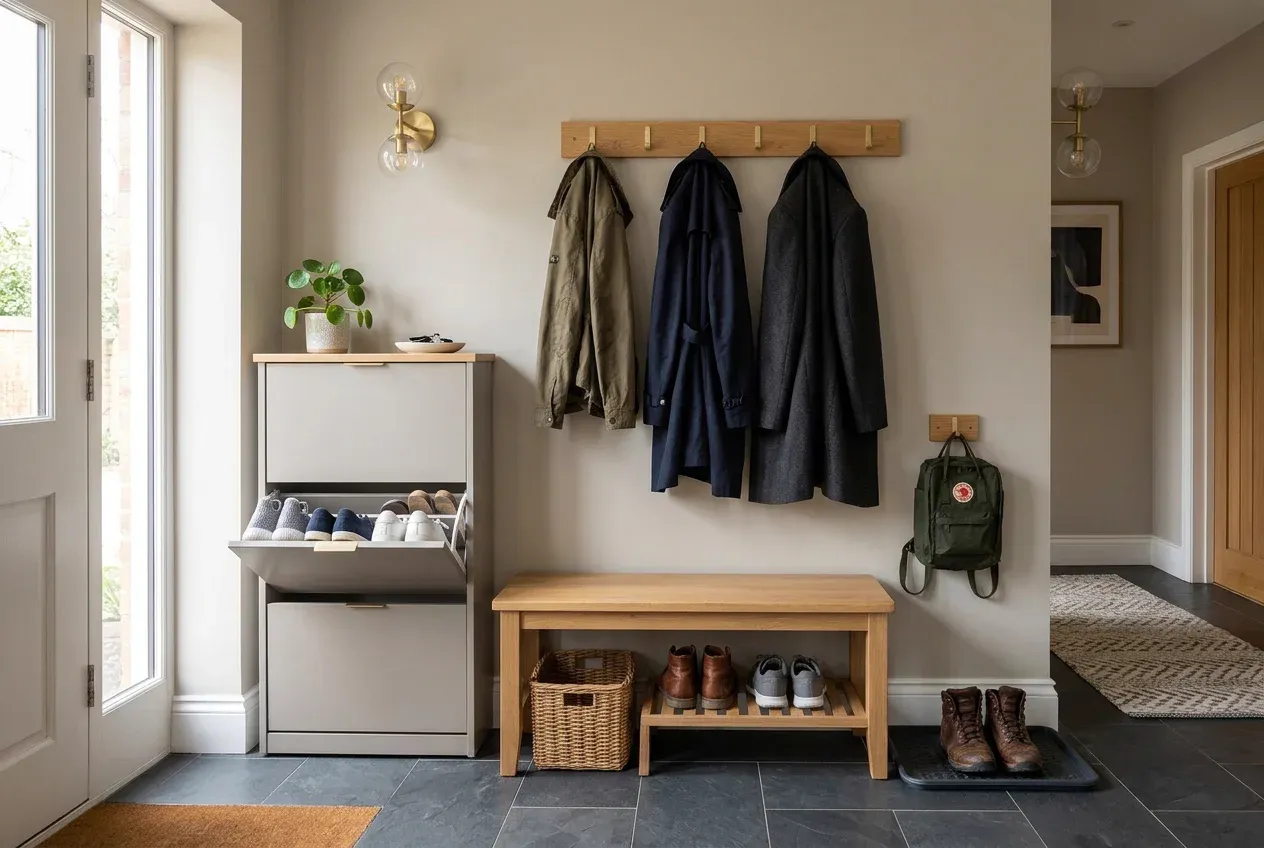
A shallow tilt-out cabinet conceals shoes without the footprint of a deep cupboard. Check its internal compartments against your largest everyday pair: boots and bulky sneakers may not fit even when the cabinet looks wide enough. Allow space in front for the compartments to open.
A bench with a lower shoe shelf makes more sense if you sit to put shoes on. Keep the seat clear and use the shelf for pairs in regular rotation. A bench that becomes a parcel shelf loses its main advantage.
Give wet shoes a separate tray instead of putting them straight into closed storage. Choose one you can lift out and empty, and let footwear dry before returning it to the cabinet.
Place hooks for the people using them
Position hooks where household members can reach them comfortably. Hold a long coat against the wall before deciding on the rail's height; its hem should clear the shoes or bench below. A lower hook for a child's jacket or school bag can help keep it off the floor.
Limit the rail to current outerwear. If bags overlap and coats hide every hook, move occasional items to a closet rather than adding another row. Leave a little space for a visitor's coat, too.
Make the drop zone smaller than the clutter
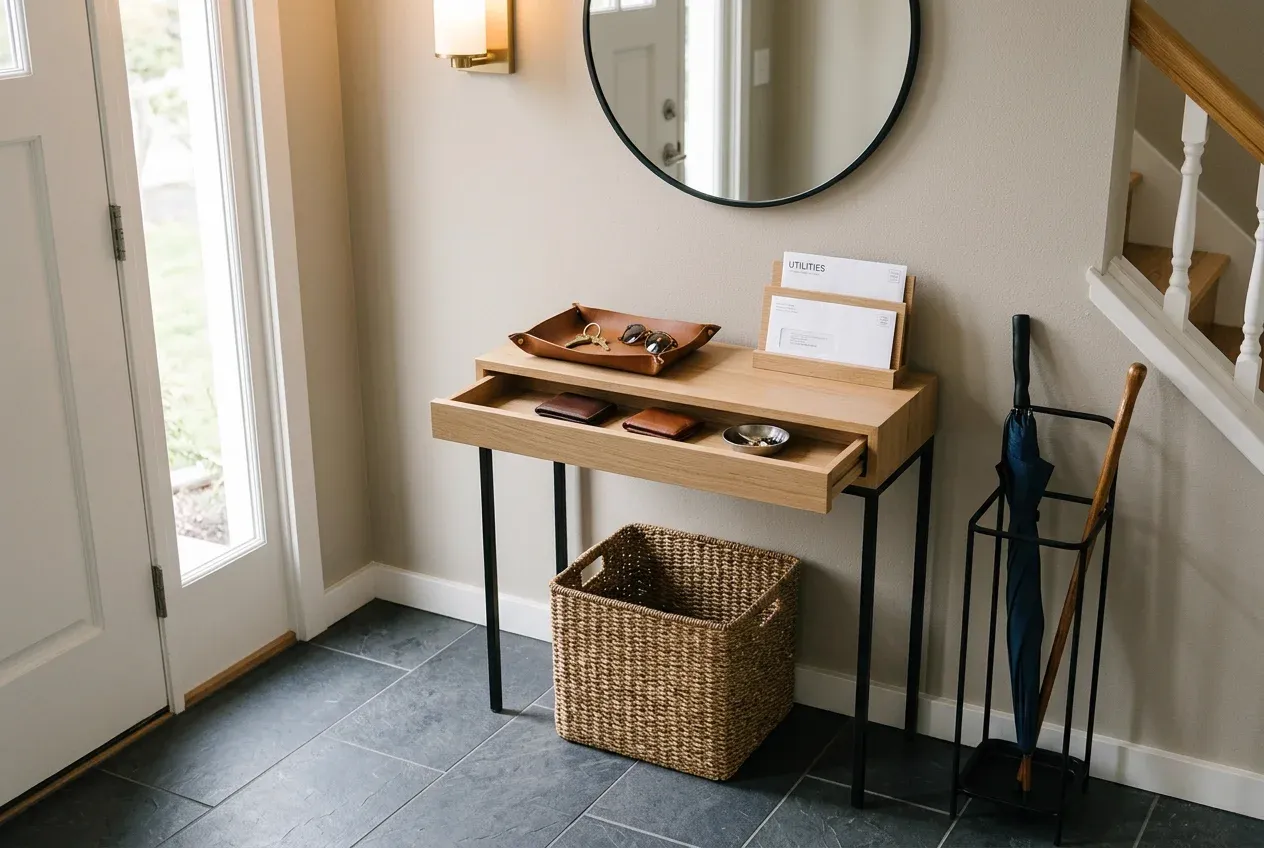
A slim console works when you need a surface and a drawer. A wall ledge suits an entrance where table legs would get in the way. Choose the shallowest option that holds what you actually set down; a bag needs more space than keys and sunglasses.
Test the arrangement with those objects before choosing a piece. A decorative ledge may suit a key dish but leave a wallet hanging over its edge. If a console only fits by narrowing the route through the room, use a smaller shelf and give the bag its own place.
Keep the surface simple:
- Put keys and a work badge in one catchall near the door.
- Give incoming mail a small upright holder, then move it to wherever you handle paperwork.
- Use a drawer for loose accessories that otherwise spread across the top.
- Put reusable shopping bags in a basket only if it fits fully beneath the console.
Avoid storing umbrellas in a fabric basket with scarves. A separate drip-catching stand or tray is easier to empty after rain. Leave some bare tabletop so there is somewhere to set a parcel while you unlock the door.
Place the mirror for a useful reflection
Stand where you expect to check your appearance, then test the mirror position. A round mirror above a console is useful for a face-and-hair check. For a full outfit view, choose a taller mirror with enough space to step back.
Look at the reflection from the doorway as well. A mirror facing an adjoining room or a bright wall may make the foyer feel more open; one facing the coat rail repeats its clutter. Move the proposed position sideways before assuming you need a larger mirror.
Choose the height around the people using it and the view it needs to provide. A fixed decorative gap above the console matters less than being able to see your face without crouching.
Choose a rug and storage you can clean easily
Start with door clearance. Test the combined thickness of the rug and any pad beneath the lowest part of the door's swing. A rug described as low pile can still catch if its backing or pad is thick.
For a covered exterior spot, a coarse scraper mat can take the first pass at dirty soles. Inside, look for a low-profile entry mat intended for moisture and tracked-in dirt. Polypropylene and nylon are common options, but the fiber name alone does not tell you whether a rug absorbs water or can go in a washing machine. Choose the cleaning method you can realistically manage.
Keep the mat flat and pair it with a grip backing or pad compatible with the floor finish. Avoid loose corners beside the threshold.
For furniture, favor smooth, wipeable surfaces and accessible lower shelves. Sealed wood, laminate, and coated metal are options to compare; exposed edges and deep grooves deserve a closer look where muddy shoes will sit. Removable trays make cleaning simpler than reaching into fixed cubbies.
Finish around the space you have
In a recessed nook, keep the bench and hooks within the recess. Where the door opens straight into a living room, group a shallow cabinet and mirror against the nearest suitable wall rather than adding a divider across the entrance.
Add color through the cabinet finish, a washable runner, or a piece of wall art. After using the layout for a few days, notice what still ends up on the floor. Give that item a more convenient home before adding more decoration.