
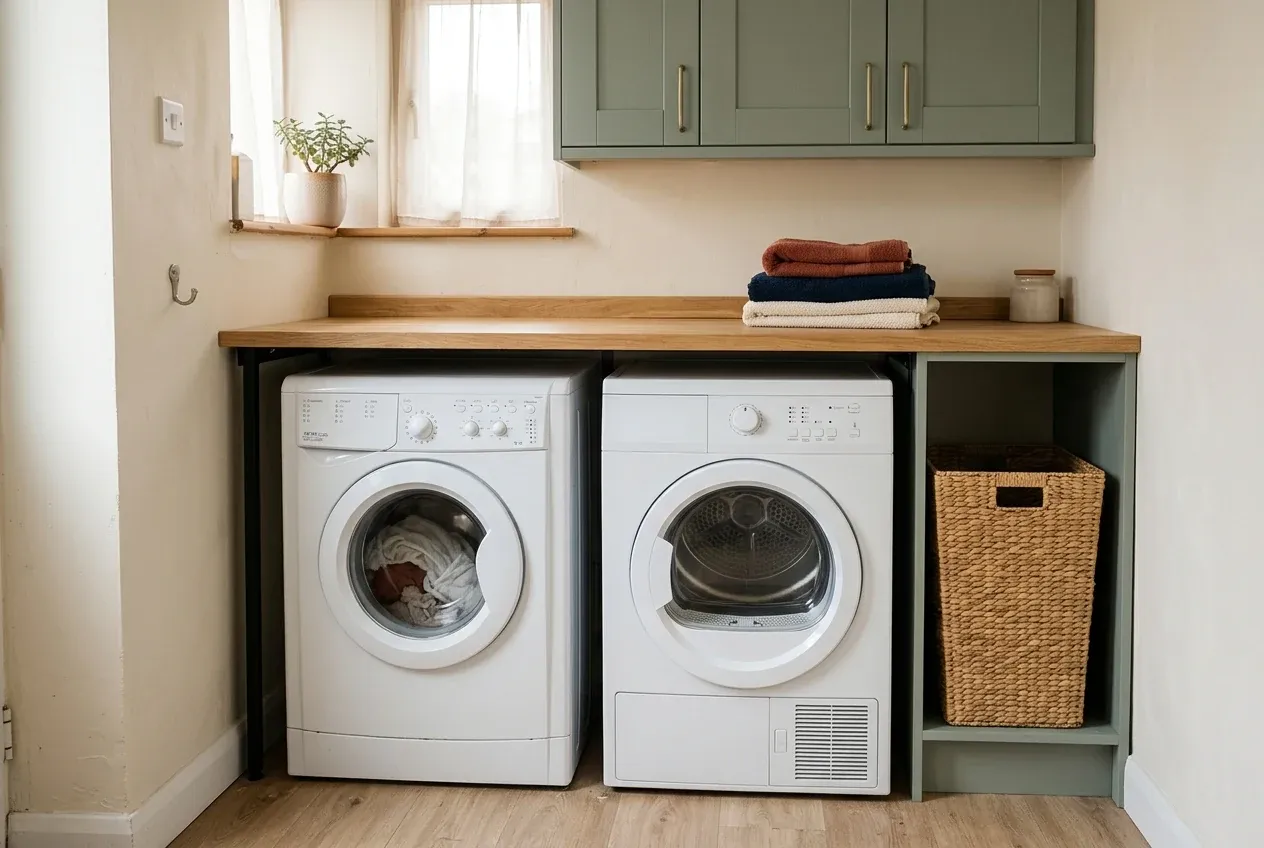
Give dirty clothes a defined place, keep a surface free for folding, and use the wall for items that would otherwise crowd the floor. In a small laundry room, these changes are more useful than squeezing an organizer into every gap.
The best laundry room ideas fit the way you wash: a divided hamper if you sort before wash day, a counter above front-loading machines, or a low cart when permanent storage is not an option. Start with the part of the routine that creates the most clutter.
Plan storage around the doors you need to open
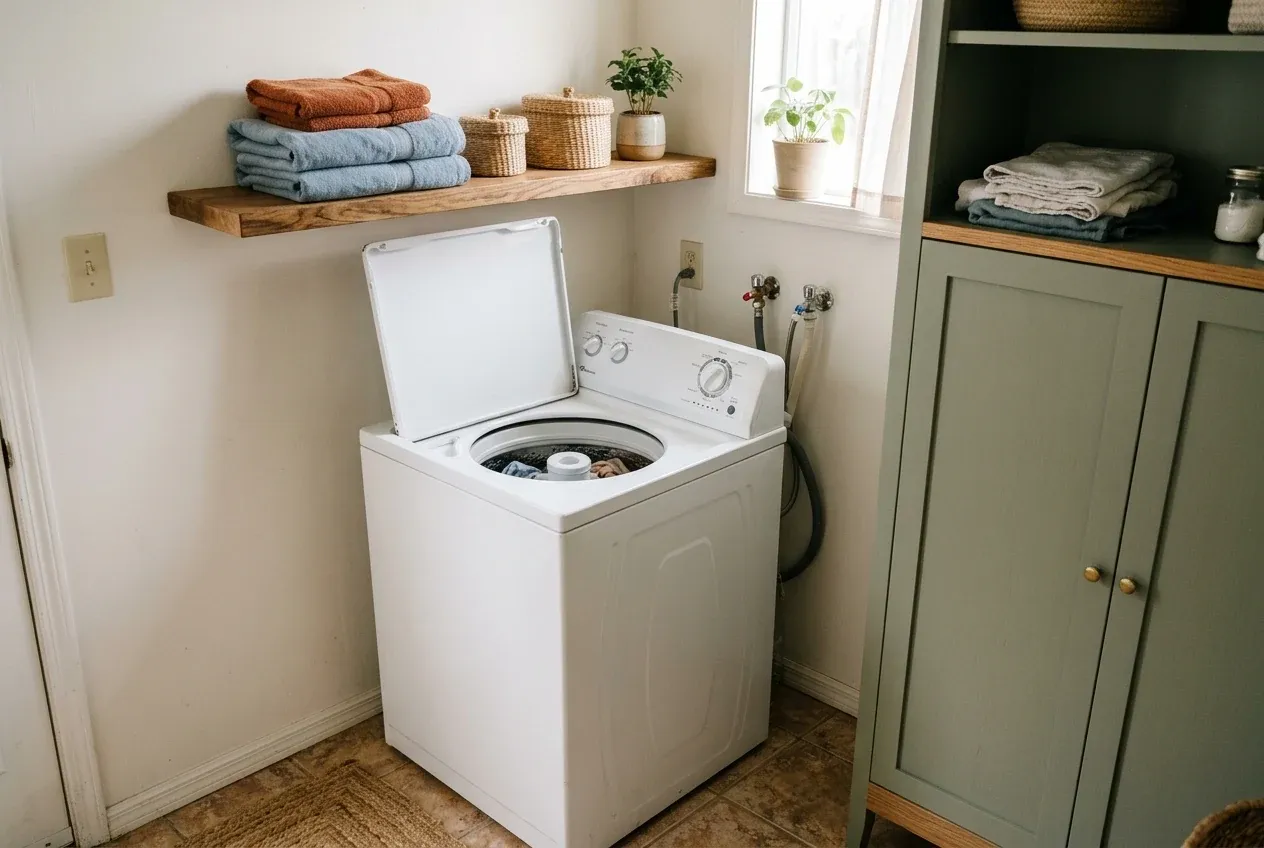
Before choosing shelves, measure the room with the appliance doors, washer lid and room door fully open. Include the space you need to stand, load clothes and lift a basket. A shelf that fits on paper can still make a top-loading washer awkward to use.
Map out the appliance space before filling it with storage:
- Leave room above a top-loader for its lid to open fully and for you to reach the controls.
- Keep the side and rear clearances specified for your machines, including space for connections and servicing.
- Leave ventilation openings and dryer exhaust routing unobstructed. Not every dryer uses an exhaust duct.
- Keep water shutoffs, outlets and service points accessible rather than hiding them behind fixed cabinetry.
A narrow gap may be part of that working space, so measure it before buying a cart.
Put wall storage where it stays usable
Use open shelves for folded towels or empty baskets, and closed cabinets for items you prefer to keep out of view. Leave enough room to reach what you store without leaning across the machines. Put frequently used items within comfortable reach instead of pushing everything to the highest shelf.
An adjustable track-and-bracket system lets you change shelf spacing as your storage needs change. Choose a system rated for the intended load, with fixings suited to the wall.
In a laundry closet, allow for the room doors as well as the machine doors. A deep shelf or cabinet handle can prevent them from closing. With stacked machines, look beside the appliances for storage you can reach easily.
Choose shelving for what it will hold
Match the shelf's load limit and support spacing to its contents. Towels and empty baskets need less support than a row of heavy containers.
For a solid shelf, look for a finish and sealed edges suited to spills and regular cleaning. On wire shelving, small items need a stable base; baskets can keep them from tipping between the wires. Follow the shelving system's limits for liners and accessories.
Add a folding surface without using the machines as supports
A counter above front-loading machines gives clean laundry somewhere to land. Support it independently with suitable cabinetry or a frame rather than resting a board on the machines. Keep the appliance clearances and access to controls and detergent drawers free.
Plan a way to service or remove the appliances without dismantling permanent cabinetry around them.
For a top-loader, a side table is often more practical than an overhead surface. In a shared hallway or mudroom, a small folding spot outside the appliance alcove may work better than a deeper counter that crowds the passage.
Hide sorting hampers, but keep them easy to empty
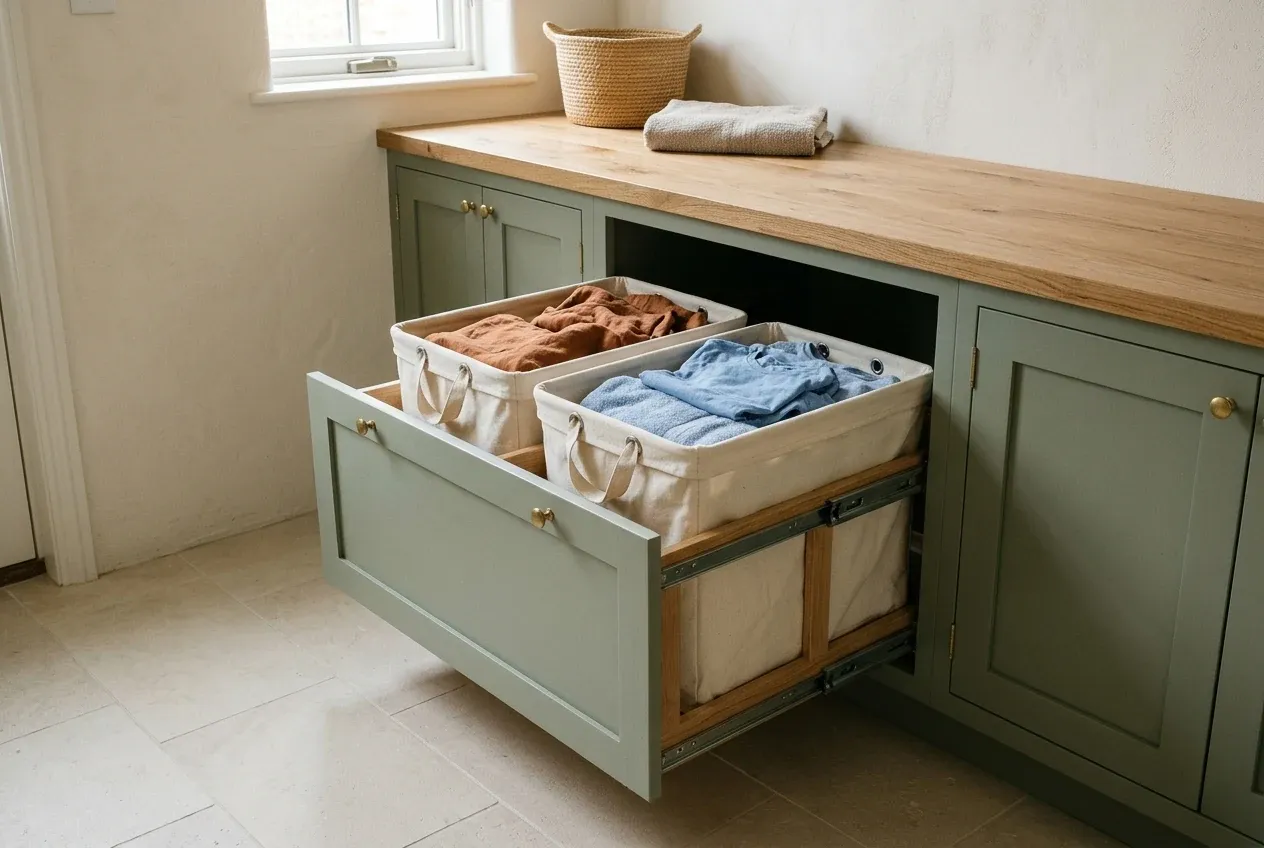
A divided hamper gives laundry piles a boundary. Choose compartments that match how you actually separate loads. If you sort only at the machine, a single removable basket may be enough.
A pull-out or tilt-out hamper cabinet hides clothes in a shared room. Leave room for it to open without blocking the route to the washer, and choose liners or baskets you can lift out easily. Concealment is less useful if emptying the hamper is a struggle.
A rolling hamper works well when you move laundry between rooms. Choose a stable model with comfortable handles and a size that fits the route to the machine. Park it clear of doorways.
Removable, washable liners make the hamper easier to clean. Dry damp towels and gym clothes before adding them to dry laundry, or wash them promptly rather than leaving them bundled in a closed cabinet.
Keep cleaning products in separate locked storage
Keep detergents, laundry packets and other cleaning products in their original containers, with their closures secured. Store them in a locked cabinet or box, out of children's sight and reach. A high shelf alone does not replace locked storage, and decorative jars are not suitable for laundry packets. See the CPSC's poison-prevention guidance.
For rentals, start with a low cart or a floor hamper
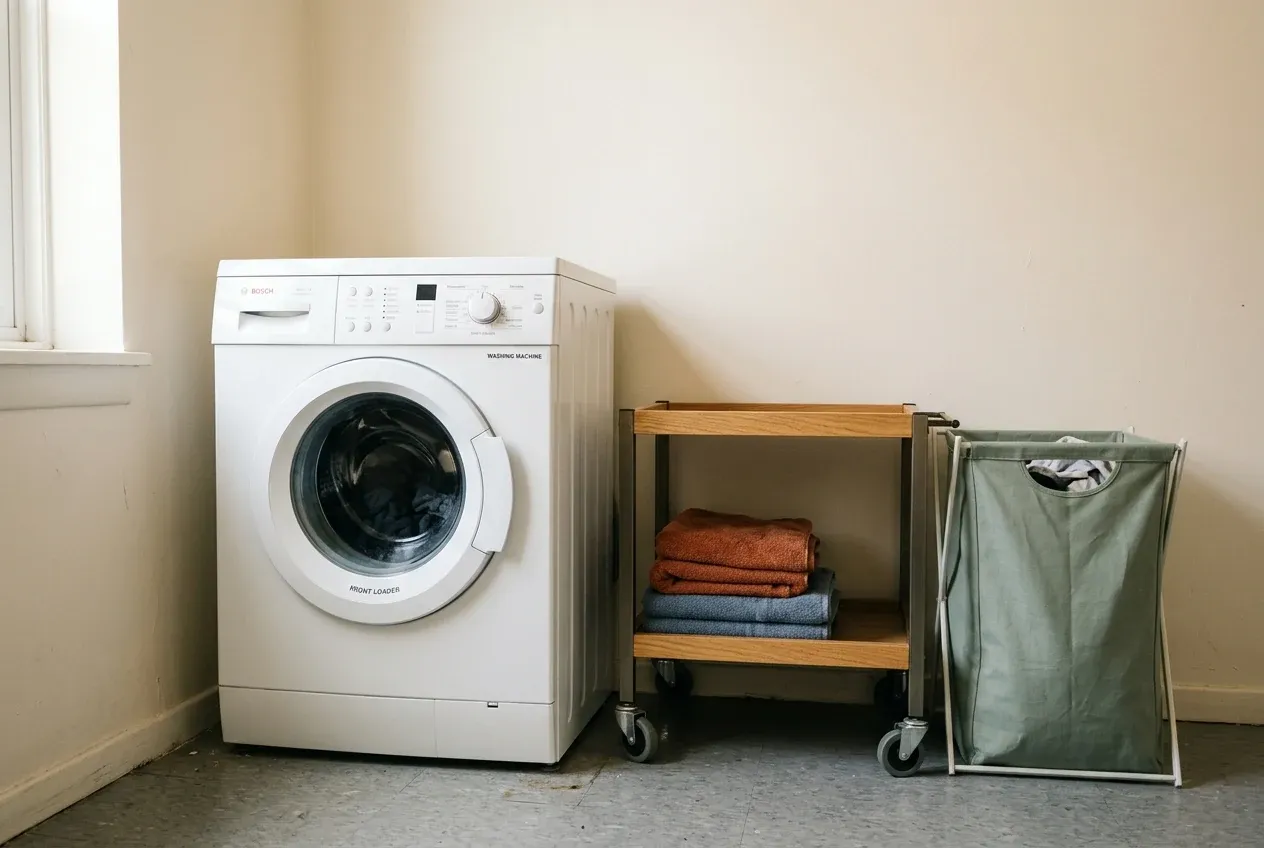
If your lease restricts wall fixings, a floor hamper and a low cart provide sorting and storage without overhead cabinetry. Use the cart for towels, empty baskets or dryer balls, with cleaning products kept in their separate locked storage.
Measure the cart's full width and depth, including handles and wheels. Allow room to pull it out without catching connections or blocking the doorway, and keep it outside the space your appliances need for operation and servicing.
A tall over-machine frame may still require wall attachment. If your lease rules out the required anti-tip fixings, choose a low freestanding arrangement instead.
Choose the first change for your layout
For a narrow closet, begin with door swing and service access, then consider a shallow wall shelf. A cart is optional, not something to force into the remaining gap.
For stacked appliances, use accessible storage alongside the stack. For a top-loader, leave the lid-opening space clear and put the folding surface beside the machine instead of over it.
In a shared bathroom or mudroom, a concealed hamper may solve the most visible clutter. In a rental nook, start with a removable basket or a low cart. Add another organizer when you know what it will hold and where it can sit without getting in the way.